 AUS
 USA


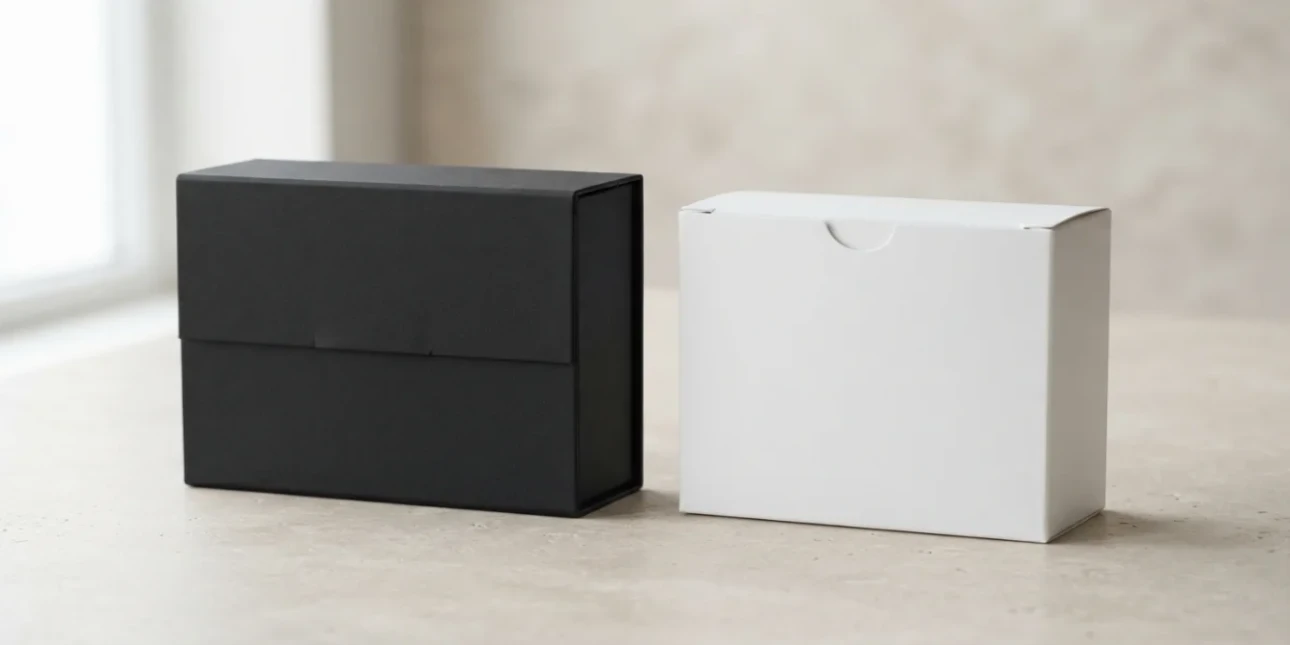
When you compare rigid boxes vs folding cartons, the main difference is the board. A rigid box uses thick board (often 1–3 mm) wrapped in printed paper, so it keeps its shape and feels premium. A folding carton uses thin paperboard, ships flat and costs much less. So choose rigid when the box is part of what the customer pays for, and folding cartons when cost and volume matter most.
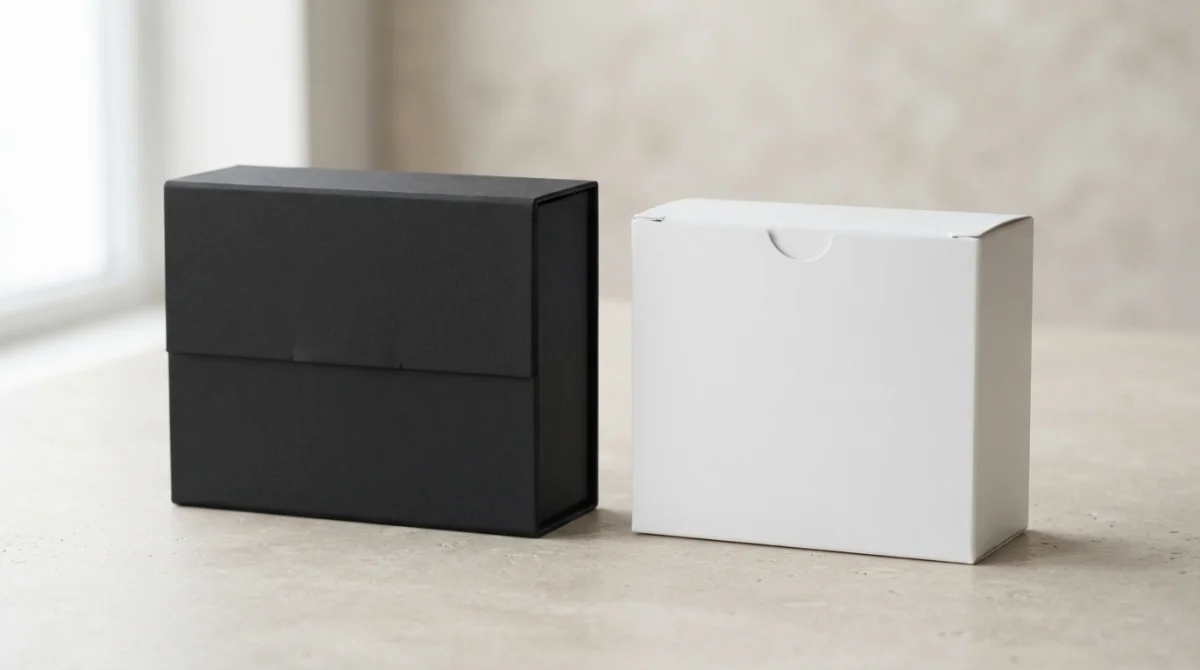
Both styles can carry your brand well. But they're built differently, they cost differently, and they send different signals to the buyer. This guide puts them side by side so you can pick the right one. If you're new to packaging, our range of custom boxes covers both.
Watch: rigid boxes vs folding cartons in 46 seconds
What is a rigid box?
A rigid box, also called a set-up box, starts as dense chipboard or greyboard. The board is cut and formed into a box, then wrapped in printed or textured paper. Because the walls are thick, it doesn't flex or collapse. Popular styles include magnetic closure, two-piece lid and base, drawer and flip-top boxes.
You'll see rigid boxes on jewellery, perfume, premium skincare, watches, spirits and corporate gift sets. Take a look at our rigid boxes for examples.
What is a folding carton?
A folding carton is one sheet of paperboard, such as cardstock, bux board or kraft. It's printed, die-cut and creased, then delivered flat. You fold it into shape when you pack the product. Tuck-end boxes, sleeves, pillow boxes and most shelf boxes are folding cartons. In fact, the folding carton has been the backbone of retail packaging since the late 1800s.
They're the standard choice for cosmetics, food, supplements and candles. For instance, see our cosmetic boxes and kraft boxes.
Rigid boxes vs folding cartons: side-by-side comparison
| Factor | Rigid box | Folding carton |
|---|---|---|
| Board | Thick chipboard, wrapped in paper | Thin paperboard, cardstock or kraft |
| Feel | Solid, heavy, premium | Light and practical |
| Protection | Holds its shape and resists crushing | Fine for shelves, but often needs an outer shipper |
| Cost per box | Higher | Lower |
| Storage | Arrives assembled and takes more space | Arrives flat and saves space |
| Reuse | Customers often keep it | Usually recycled after opening |
| Best for | Gifts, luxury, launches, fragile items | Shelf products, high volume, tight margins |
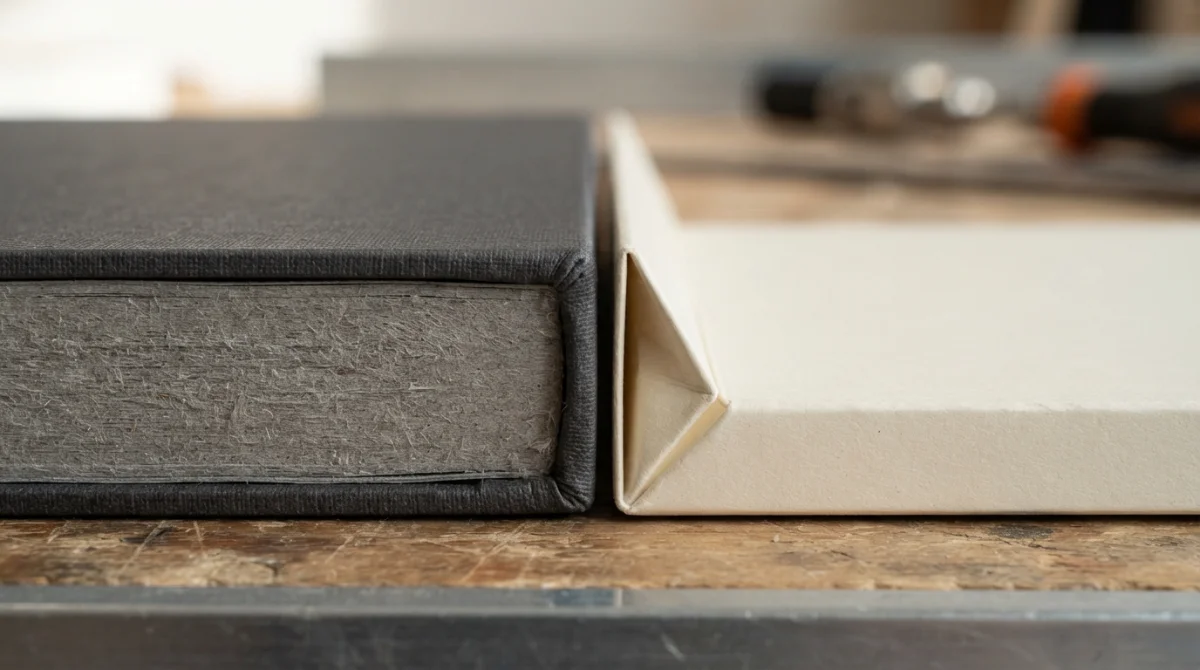
Why do rigid boxes cost more than folding cartons?
Rigid boxes use several times more board, and wrapping them takes extra labour. They also travel assembled, so the same van carries far fewer of them. Folding cartons, by contrast, are printed on large sheets and shipped flat, so the unit price falls fast as quantity rises.
Even so, a rigid box can still pay for itself. If it lifts the perceived value of a £60 product, the extra cost is often recovered in price and repeat orders.
A simple rule of thumb
Many packaging buyers use the retail price as a guide. When a product sells for more than about £30 to £50, a rigid box becomes worth considering. Below that, a well-printed folding carton usually makes more sense. Weight matters too, because folding cartons suit lighter products, while heavy items need stronger board.
Do rigid boxes protect products in the post?
Not on their own. A rigid box keeps its shape, but parcels still get dropped and stacked. So for online orders, put the rigid box (or a folding carton) inside a corrugated mailer with a snug insert. That way you get the premium unboxing and the transit protection.
Branding and finishes
Both types take the same main finishes: CMYK, Pantone colours, matte or gloss lamination, spot UV, embossing and foil. Rigid boxes also add magnets, ribbon pulls, textured wraps and foam or card inserts. Folding cartons, meanwhile, add windows, hang tabs and built-in dividers.

Which is more sustainable?
Both can use recyclable board. Folding cartons use less material and ship flat, so they cut transport emissions. Rigid boxes use more board, but people often keep and reuse them, which extends their life. Kraft cartons also suit brands that want a natural look.
Popular styles of each
- Magnetic closure (rigid): a hinged lid held shut by hidden magnets.
- Two-piece (rigid): a separate lid and base, classic for candles and apparel.
- Drawer (rigid): a tray that slides out of a sleeve.
- Tuck end (carton): the most common retail box.
- Crash-lock base (carton): locks into place, so it suits heavier items.
- Sleeve (carton): a printed band over a tray. See our packaging sleeves.
Rigid boxes vs folding cartons: which should you choose?
- Choose a rigid box when the product is a gift, sells at a premium, is fragile, or when unboxing is part of the brand.
- Choose a folding carton when you sell in volume, need low costs, stock shelves or have little storage.
- Use both across a range: cartons for single items and a rigid box for gift sets.
Creative Boxes makes both in any size, with no minimum order, free design help and free UK shipping. Production takes 4–8 business days after artwork approval. Ask for a free quote and tell us about your product, then we'll suggest the right build.
Frequently asked questions
What is the main difference in rigid boxes vs folding cartons?
A rigid box uses thick board wrapped in paper and keeps its shape. A folding carton uses thin paperboard, ships flat and folds into shape.
Are rigid boxes more expensive than folding cartons?
Yes, because rigid boxes use more board, need hand wrapping and ship assembled.
Can folding cartons look premium?
Yes. Good board, full-colour print and finishes such as foil, spot UV or embossing can make a carton look high-end for less.
Do rigid boxes ship flat?
Most don't, since the board can't fold. However, some collapsible rigid styles do fold flat to save space.
Should I use rigid boxes or folding cartons for cosmetics?
Folding cartons suit most single cosmetic products, while rigid boxes suit premium sets, perfume and gift packs.


